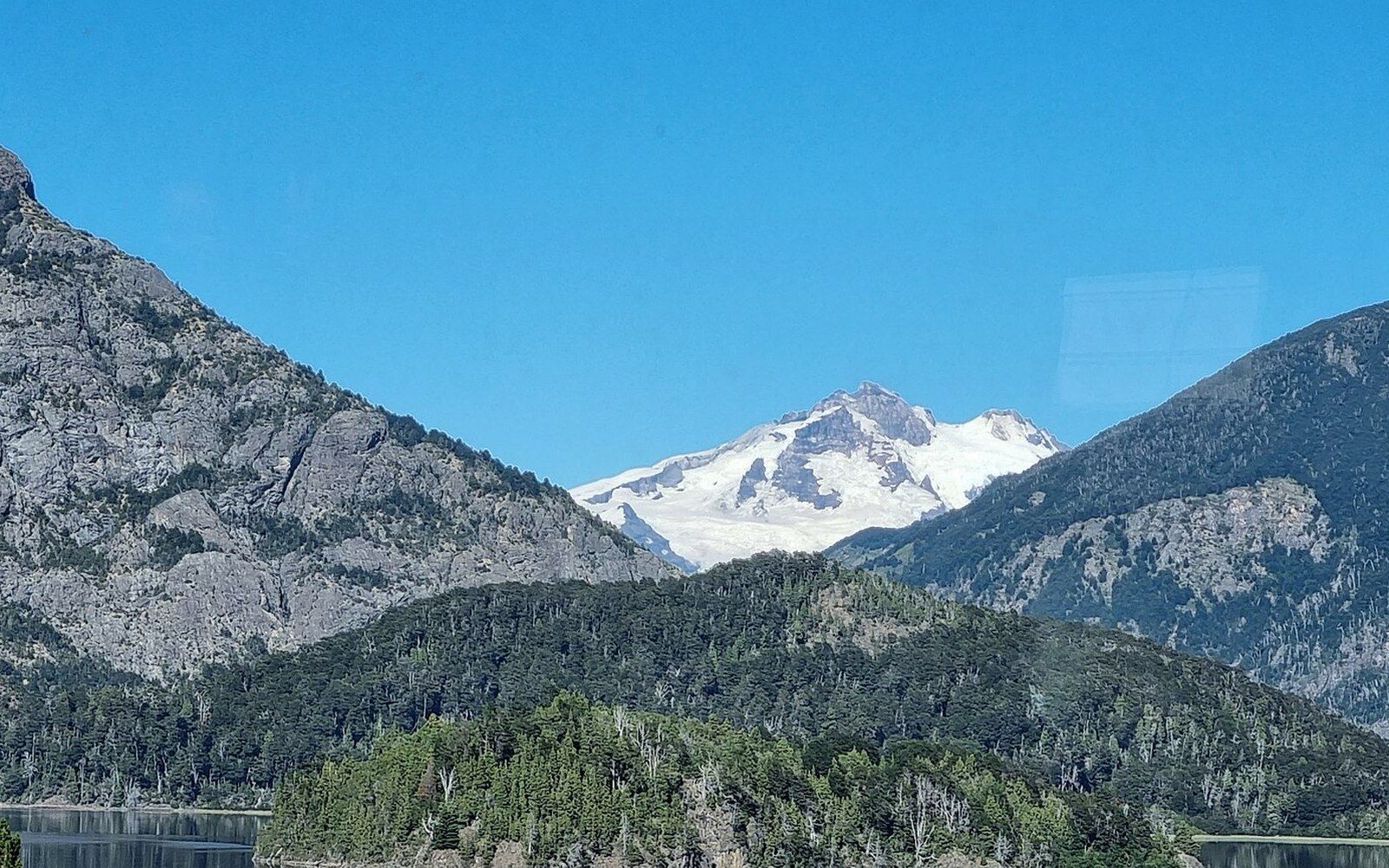
Chapelco
The mountain above San Martín de los Andes reads quieter than its neighbours — and that is not a complaint.
The hill and what shapes it
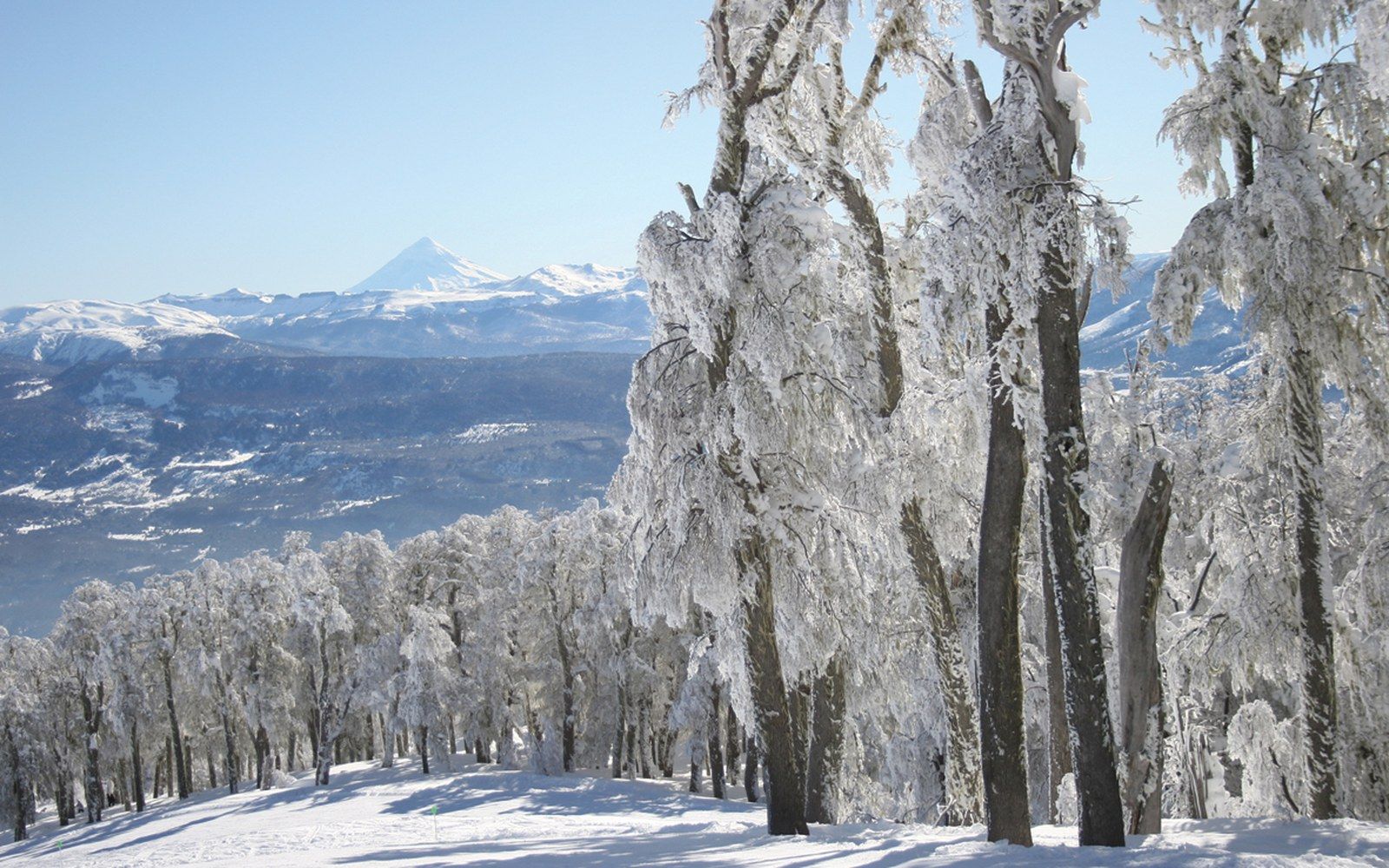
Chapelco rises above San Martín de los Andes in the Neuquén lake district, sitting inside Lanín National Park at a summit elevation of around 1,980 metres. Its vertical drop — roughly 730 metres from the top of the lift system to the base — is modest by Andean standards, but the mountain's aspect and the forest that rides up its flanks give it a character that numbers alone do not capture. Lenga beech and araucaria — the monkey-puzzle tree, native to this latitude and protected inside the park — frame the runs from the lower mountain upward, and the effect is markedly different from the open, above-treeline exposure of Las Leñas or the upper reaches of Cerro Catedral.
That enclosure is also shelter. Chapelco sits far enough east and south of the main cordillera that the worst of the zonda — the warm, desiccating wind that drops off the lee side of the Andes and can strip a snowpack in hours — tends to lose force before it arrives. The result is a resort that holds its snow reasonably well through the season even in years when the northern group is struggling. The storms that build the snowpack here come from Pacific systems tracking across the range between June and September; in poor years the base is thin everywhere, but Chapelco's forested terrain loses less of what it receives to wind erosion and sublimation.
San Martín de los Andes is a small city by Patagonian standards, compact and sitting at lake level on the shore of Lago Lácar. The road to the resort climbs directly from the town, which means the mountain and the place below it are genuinely connected — a relationship worth noting in a country where several resorts exist at a geographical remove from any settlement that could honestly be called a town. Lanín National Park, administered by Argentina's Administración de Parques Nacionales, sets the boundary conditions for what can be developed on the mountain, and that constraint has kept Chapelco's footprint contained.
From the field notes
Key dimensions
- Summit elevation
- approximately 1,980 m
- Vertical drop
- approximately 730 m
- Location
- Lanín National Park, Neuquén province
- Town below
- San Martín de los Andes, on the shore of Lago Lácar
The terrain skews toward the middle of the difficulty range. There is nothing here to rival the pitch of the Marte chair above Las Leñas, and the upper mountain's open faces, while genuine, are not expansive. What Chapelco offers instead is coherence: a mountain that fits its setting, a forest that gives the runs texture, and a degree of protection from the atmospheric violence that defines the northern Andes in a bad week.
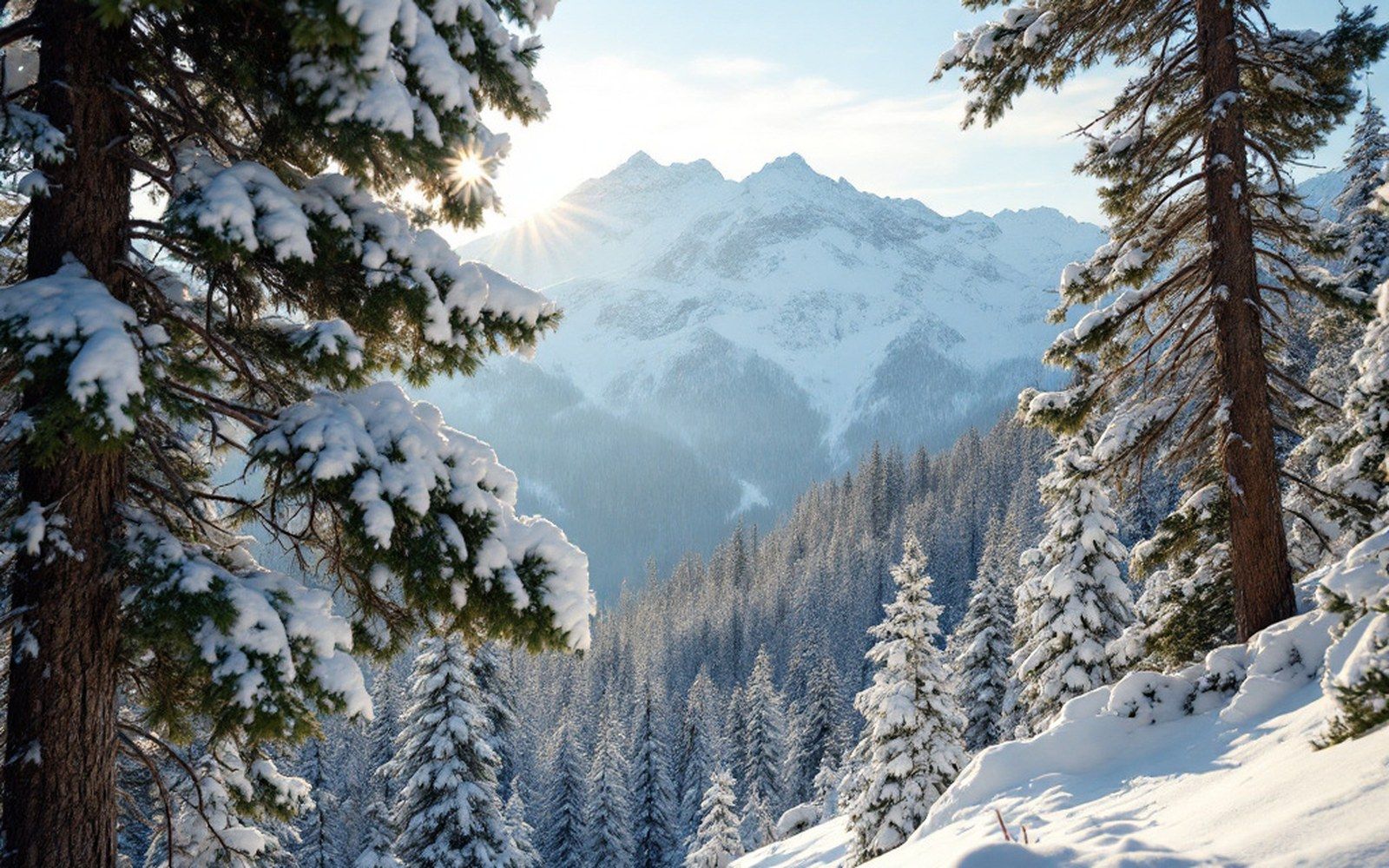
southern beech native to Patagonian treeline elevations
monkey-puzzle tree; protected inside Lanín National Park
the warm, dry lee-side wind; loses force before reaching Chapelco's aspect