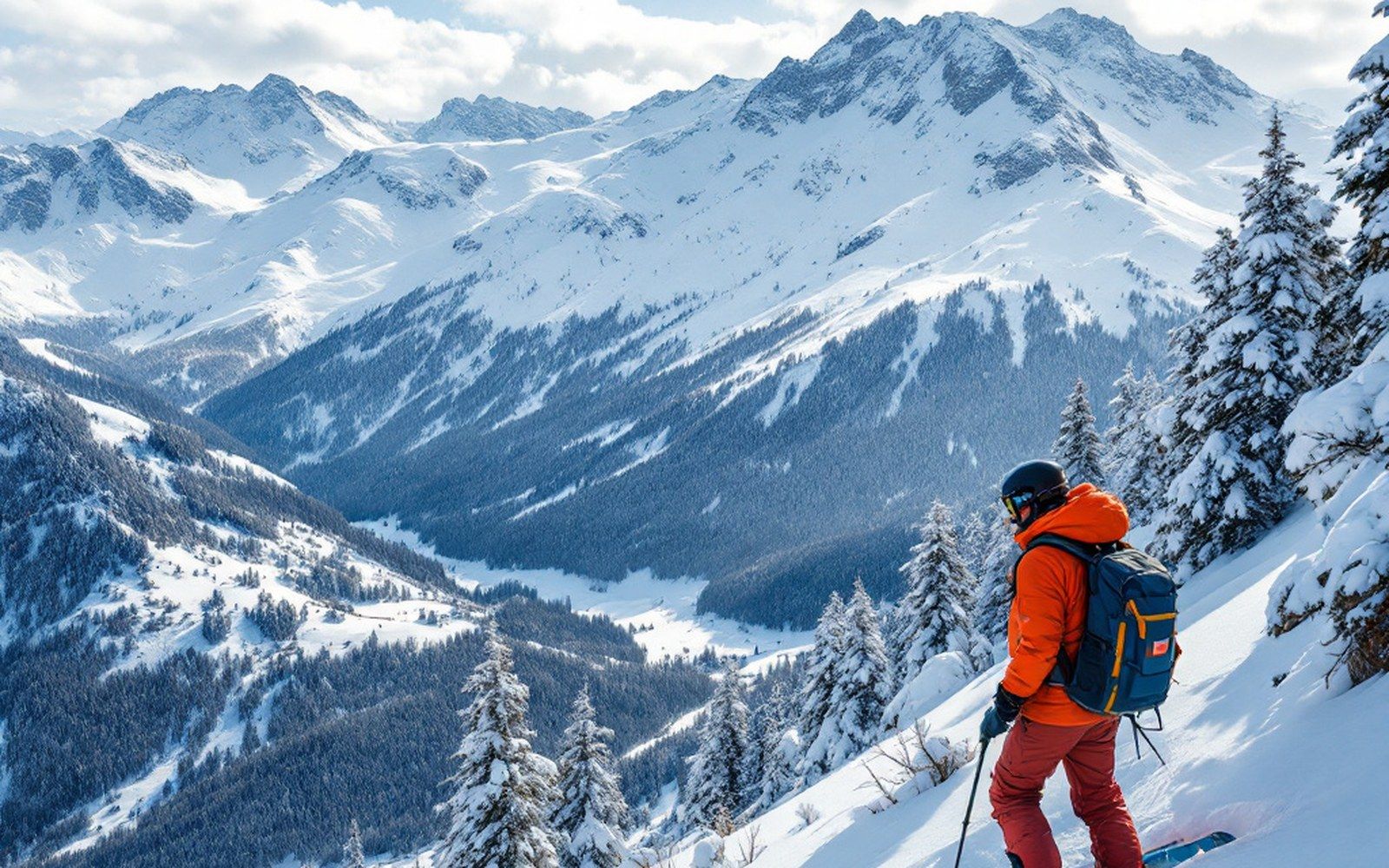
Caviahue skis through monkey-puzzle trees, on a volcano that is still working
The only resort in Argentina that runs its lifts through an ancient conifer forest, on the flank of a volcano that still steams.
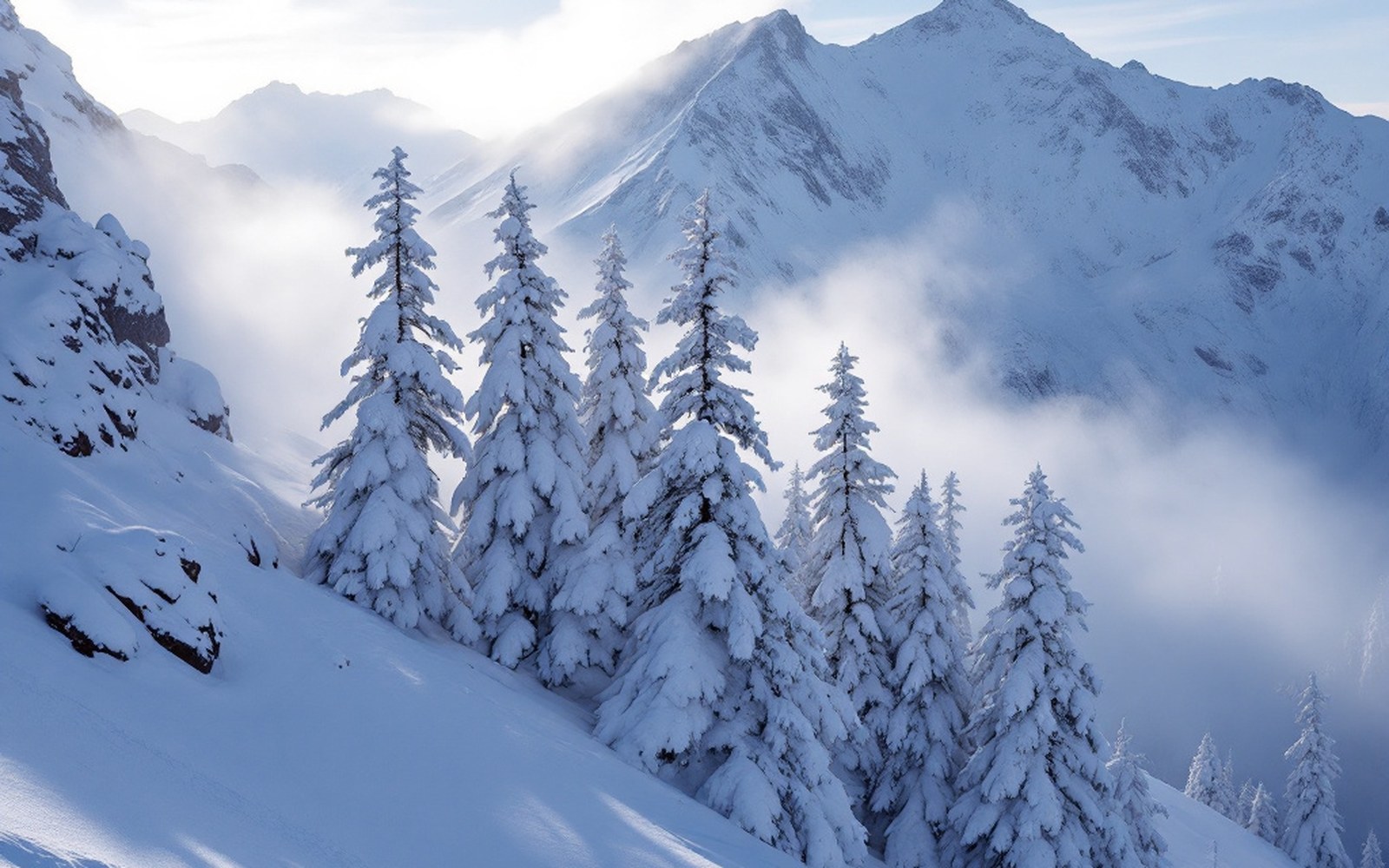
A forest that predates the lifts by millions of years
The araucaria — the monkey-puzzle tree, Araucaria araucana — is the defining organism of Neuquén's high country. It is not a decorative backdrop. The species has been on the continent since the Triassic, and the specimens standing in the ski area at Caviahue are centuries old, their candelabra crowns rising above the snow surface at an elevation where almost nothing else would survive the winters. Skiing between them is a genuinely unusual experience — not groomed powder between pines, but a passage through something older and less managed. The tree is protected in its natural range in Argentina, and the runs at Caviahue pass directly through it.
The volcano those trees grow on is Copahue, a stratovolcano straddling the border between Argentina and Chile that has been in a state of intermittent low-level activity for decades. It erupted with enough force to scatter ash in 2012 and has produced periodic alerts since. The resort sits on Caviahue caldera's eastern wall, not on the active summit cone, which stands to the west — but the relationship is not merely scenic. Fumarolic activity, the smell of sulfur and the visible steam from Copahue's crater lake are facts of the landscape here, not anomalies. The resort operates beneath a mountain that is still making itself.
From the field notes
What makes it singular
- Araucaria forest in the ski area
- the only lift-served terrain in Argentina running through Araucaria araucana in its natural range
- Active volcano
- Copahue's crater lake, fumarolic steam and periodic ash activity are part of the landscape the resort occupies
- Caldera setting
- the ski area climbs the eastern interior wall of the Caviahue caldera, with the caldera lake visible from the runs
- Small, regional character
- no large city below it; the resort defines the village, not the reverse
What the terrain actually is
Caviahue the village and Caviahue the resort share a name and a setting: the caldera lake, Lago Caviahue, sits in view, and the town is small enough that the resort defines it rather than the other way around. The ski area climbs the interior wall of the caldera to a summit of around 2,200 metres, which places it in the middle range among Argentine resorts by elevation — higher than Cerro Castor in Tierra del Fuego, considerably lower than Las Leñas in Mendoza province.
The vertical is modest, and the area is compact. What distinguishes it is not scale but character: the araucaria forest threaded through the lower and mid-mountain terrain, the volcanic geology underfoot, and the snow climate that results from the mountain's position in northern Neuquén. Caviahue sits in a snowbelt fed by the same Pacific weather systems that supply the rest of the Patagonian Andes, but the northern latitude and the local topography of the caldera create a snow shadow effect on some aspects while concentrating snowfall on others. In a good year the base runs deep and settles well; in a dry year the araucarias emerge from very thin cover and the resort feels the shortfall directly.
The season runs roughly from late June through early September, aligned with the rest of the Argentine south. The clientele is heavily regional — families from Neuquén city, visitors from across the province — and the atmosphere is quiet by the standards of the larger resorts. There is no equivalent of Bariloche below it, no city infrastructure leaning on the mountain to absorb a crowd.
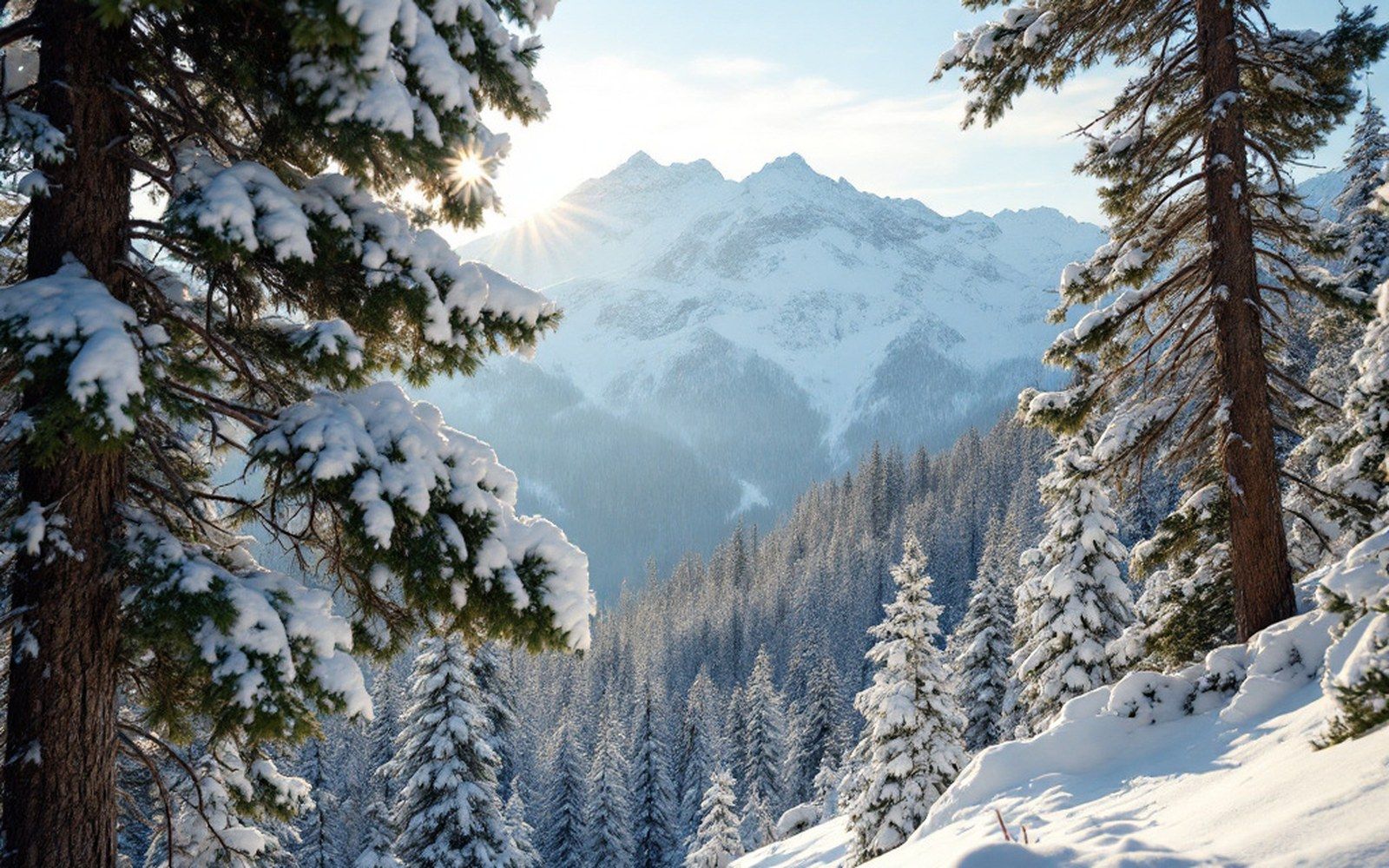
What the volcano contributes
Copahue's contribution to the landscape extends below the snow line. The hot springs at Copahue village, a few kilometres west, draw on the same hydrothermal system that keeps the crater lake acidic and the summit steaming. The geothermal system at Copahue is scientifically well-documented — one of the most active hydrothermal environments in South America — and the spring complex has been used therapeutically since at least the nineteenth century.
For the snowpack, volcanic geology means permeable, rocky substrate rather than the denser soils of the lenga-beech country farther south. The lenga (Nothofagus pumilio), the deciduous southern beech that marks the treeline across most of Patagonia, is present at Caviahue but secondary; it is the araucaria that defines the mountain's visual identity. That inversion — conifer dominant, beech subordinate — is specific to northern Neuquén and the nutrient-poor volcanic soils the araucaria has spent millions of years learning to use.
Skiing through it at low speed on a clear July morning, the sulfur faint in the air and the old trees holding the light above you, is an experience with no equivalent elsewhere in the Argentine winter.
the monkey-puzzle tree; a protected native tree of Neuquén; Triassic-origin conifer dominant in northern Neuquén
the deciduous southern beech that marks the treeline across most of Patagonia; secondary at Caviahue
relating to fumaroles, vents emitting volcanic gas and steam; visible from the Copahue summit area
terrain sheltered from prevailing weather, receiving less snowfall than exposed aspects on the same mountain